What Season Is Your Business In?
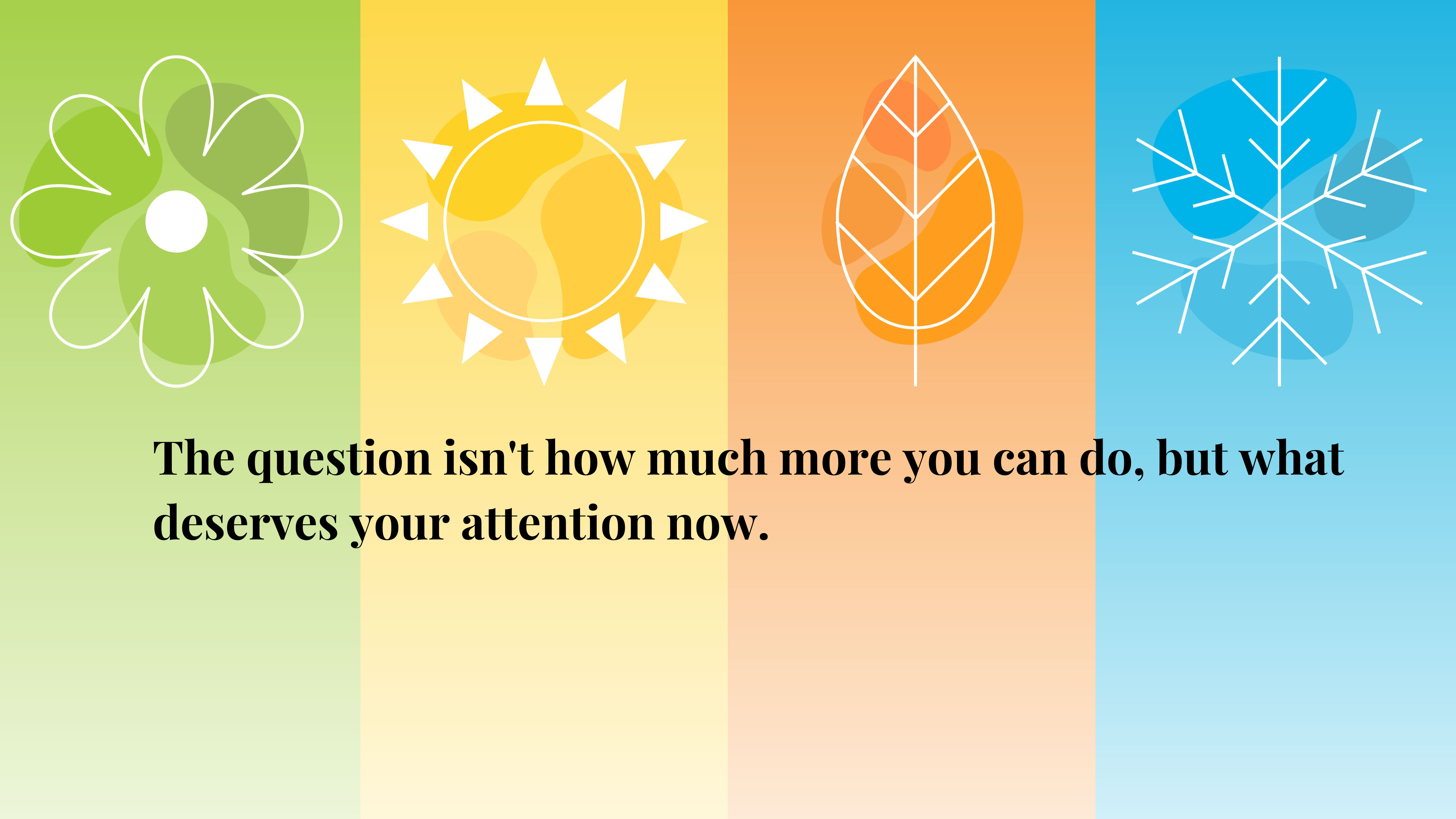
Nature moves through different seasons, each with its own rhythm and purpose. Our businesses do too. Recognising the season we're in can help us understand what needs our attention, rather than constantly feeling we should be doing more.
Here in Switzerland, November brings shorter days, falling leaves and the approach of winter. Nature is settling into a different rhythm, and I've noticed more people talking about slowing down, protecting their energy and preparing for a quieter season. Of course, if you're reading this in the Southern Hemisphere, you're heading towards summer, with longer days and a very different feeling in the air.
For many spiritual and holistic practitioners, working with natural rhythms and cycles is already familiar. We understand that nature has its periods of growth, abundance, harvesting and restoration. I wonder how often we bring that same understanding into our businesses.
We're constantly being encouraged to grow our businesses, attract more clients and achieve more. But is it realistic to expect our businesses to keep growing all the time?
What Do Business Seasons Look Like?
When I think about the seasons, I can see some interesting similarities with the different experiences we have when running a business. There's an important distinction, though. The seasons of our businesses don't necessarily follow the seasons outside our windows. You could be entering winter where you live while your business is experiencing an exciting period of growth. You might even be growing one part of your business while developing something completely new in another.
Spring is a time for new beginnings. Ideas start taking shape, possibilities open up and we feel inspired to create something. You might be developing a new workshop, studying a different healing modality or exploring a new direction. Those early stages bring both excitement and uncertainty as we discover which ideas are worth pursuing.
Summer is a time for growth and activity. You could be welcoming new clients, delivering programmes, running retreats or putting energy into making your work more visible. It can be an exciting and rewarding period, although more opportunities can also mean more responsibility.
Autumn is a time for harvesting and appreciating what we've grown. An established service might be attracting regular clients, or a workshop you've worked hard to develop is finally showing results. It's an opportunity to enjoy what you've created, review what's working and consider what deserves further attention.
Winter is a time for restoration and reflection. The pace may become quieter, giving us space to think, learn or simplify. A quieter period doesn't mean nothing is happening. You could still be seeing regular clients, maintaining existing services or quietly preparing something new.
These aren't rigid stages or a timetable we have to follow. They're simply different ways of recognising what our business is experiencing and what it needs from us.
A good example is the difference between creating something new and looking after it once it's launched. There's a particular excitement that comes with developing a new retreat, workshop or programme. You have an idea, a goal to work towards and all the anticipation of bringing it into the world.
Once it's launched, the energy changes. There are clients to support, services to deliver and relationships to nurture. It's easy to become attracted to the next exciting idea, even when something we've already created still has plenty of potential. Sometimes an existing offer simply needs more time and attention to become established.
Both creating something new and nurturing what we've already built are important parts of running a business. They simply require different kinds of energy and attention.
What Has This Year Taught You?
As we approach 2027, I think it's worth recognising how far we've already come before concentrating on everything we want to achieve next. You may have developed a new service, completed some training, built meaningful relationships with clients or become more confident in your work. You might have discovered a way of marketing that suits you better or learnt something important about the kind of business you want to run.
Of course, not everything will have gone according to plan. There may have been disappointing results, unfinished projects or ideas that didn't work out as you'd hoped. We can become so focused on what we haven't achieved that we overlook what we've learnt along the way. Looking back at what went well and what didn't can help us make better decisions for the year ahead.
When Intuition Meets Practical Reality
As spiritual and heart-led entrepreneurs, we often rely on our intuition when making decisions about our businesses. We want our work to feel right, reflect our values and fit the lives we want to live. But we also have bills to pay, clients to look after and a business to keep running.
Sometimes those needs don't quite match. You might feel ready to slow down, but still need the income from your clients. Or you could be full of ideas for something new when your existing services need more attention.
I don't think we have to choose between trusting our intuition and being practical. We can listen to what feels right while also looking at what's working, what isn't and what we can realistically manage.
You might decide to explore that new idea without rushing to launch it, or find a way to ease your workload without losing the income you need. It's about finding a balance between what feels right for you and what makes sense for your business.
So What Does Your Business Need Right Now?
As you look towards 2027, I'd like to invite you to consider three questions before adding more goals and projects to your plans.
What season does my business feel like it's in right now? Are you creating something new, experiencing a period of growth, enjoying what you've already established or feeling the need to step back and reflect?
What does my business actually need from me? Does it need more visibility, attention to existing clients, better organisation or the opportunity to finish something you've already started? And what do you need personally to keep running your business sustainably?
What one action could support that? It could be preparing a launch, giving an existing offer more attention or making a small change to how you spend your working week.
You don't need to reinvent your business. Recognising what needs your attention and choosing one meaningful action is a useful place to begin.
Building a Business That Fits Your Life
In my previous blog, I Want My Business to Be Found AND I Don't Want to Live on Social Media, I talked about creating businesses that support the lives we want to live, rather than businesses that take over our lives. I think this idea of business seasons connects rather beautifully with that.
We're not the same people we were when we first started our businesses. Our experiences, circumstances and priorities change, and what we need from our businesses may change too. Recognising those changes doesn't mean abandoning our ambitions or responsibilities. It means making more thoughtful decisions about where we put our energy, while continuing to build something that's both meaningful and sustainable.
Nature doesn't expect every season to look the same, and we could extend a little of that understanding to ourselves. Building a sustainable heart-led business isn't necessarily about being in a constant state of growth. It's about recognising what needs our attention and giving it the care it deserves.
As you look towards 2027, consider what matters most in the season you're experiencing now. The question isn't how much more you can do, but what deserves your attention now.