Good AI, Bad AI: Who Gets to Decide?
AI seems to be dividing opinion everywhere. But perhaps there's another way to look at things. One that gives us space to see the bigger picture, listen to ourselves and decide what feels right for us and our work.
Recently, I decided to give Threads another go and soon found myself reading conversations about AI. What struck me most wasn't whether people loved it or hated it, but how quickly those conversations turned into arguments.
One discussion began with someone expressing disappointment that an independent author was using AI-generated artwork to promote their books. Another involved someone who was delighted that AI had finally helped him create things he'd been dreaming about for years. Both raised interesting questions about creativity, opportunity and the rights of artists, but reading the responses, I began to wonder whether everyone was even discussing the same thing.
And then I came across a magazine announcing it was banning AI, complete with an image of people smashing the ChatGPT logo with hammers. Well, that certainly got my attention! It also got me thinking about something much bigger than AI. Why does everything seem to become a choice between good and bad, right and wrong, for or against?
And what does all this mean for those of us running heart-led, spiritual businesses, trying to share our gifts, our creativity and the work we care deeply about? Because whether we use AI or not, we're all trying to bring our work into an online world. A world where everyone has an opinion on how we should do that.
Are we even talking about the same thing?
One thing I've noticed is that we talk about AI as though it's one single thing, when we're actually discussing very different technologies, how they're developed, what they produce and the ways people choose to use them.
For example, using AI to help organise your ideas for a workshop is quite different from generating artwork for a product. Using it to help you research a subject isn't the same as publishing an article entirely written by AI. And neither is the same as allowing AI agents to make decisions or take actions on your behalf.
Yet all these different uses tend to get bundled together in arguments about whether AI is good or bad.
Then there are the bigger questions about how AI systems are trained, whether people's work has been used without their permission, what happens to jobs and who benefits financially. These are genuine concerns that deserve to be taken seriously.
But there are also people who have found opportunities through AI that they might never have had otherwise, particularly those without the money, skills or resources to bring their ideas into the world.
We can recognise the opportunities while still questioning the way the technology is developed and used. One doesn't cancel out the other.
Perhaps we'd have more useful conversations if we took the time to understand exactly what we're discussing before deciding whether we're for or against it.
When your work is personal, so are your choices
For many heart-led, spiritual entrepreneurs, their business has grown from something they believe in deeply. They may have spent years developing their skills, doing their own inner work and finding a way to help others. So being told that the way they create or share that work is wrong can feel surprisingly personal.
I was listening to a podcast recently about cognitive dissonance, which is the discomfort we can experience when two beliefs don't sit comfortably together. It made me think about someone who values human creativity but also finds AI helpful for certain business tasks. Both things can be true, even if other people insist they can't.
And then there's the pressure to fit in. If the people around you strongly oppose AI, will you feel comfortable admitting you use it? And if everyone in your business circle is adopting AI, will you feel comfortable saying you'd rather not?
Perhaps that's something worth considering before we rush to defend a position. Are we making choices because they suit our work and our values, or because we're worried about what other people will think?
Is social media making all this worse?
Social media platforms increasingly show us content based on what holds our attention, including things we disagree with. If we spend time reading an argument, checking the comments or going back to see what someone has said, we may find ourselves being shown more of the same.
Before long, it can feel as though everyone is arguing about something, and we're expected to have an opinion too.
For a heart-led, spiritual entrepreneur, this can be exhausting. You might open social media to share a new workshop, talk about your work or simply spend a little time with the people who follow you. Instead, you find yourself questioning your choices, feeling frustrated by other people's opinions or getting caught up in conversations you never intended to join.
And all that takes time and energy away from the work you actually went online to share.
Perhaps we don't need to join every conversation or decide who's right. Sometimes it might be more helpful to look at what's happening from a different perspective.
What happens when we step outside the argument?
After those conversations on Threads, I realised just how much I was allowing other people's arguments to irritate me. So I spent some time doing my own inner healing, looking at my reactions rather than concentrating on what everybody else was saying. I've also decided to step away from Threads for a while, for my own sanity!
Something became clearer to me. There's a difference between understanding both sides of an argument and stepping outside the situation altogether. And that's something my years of spiritual and inner work have helped me understand.
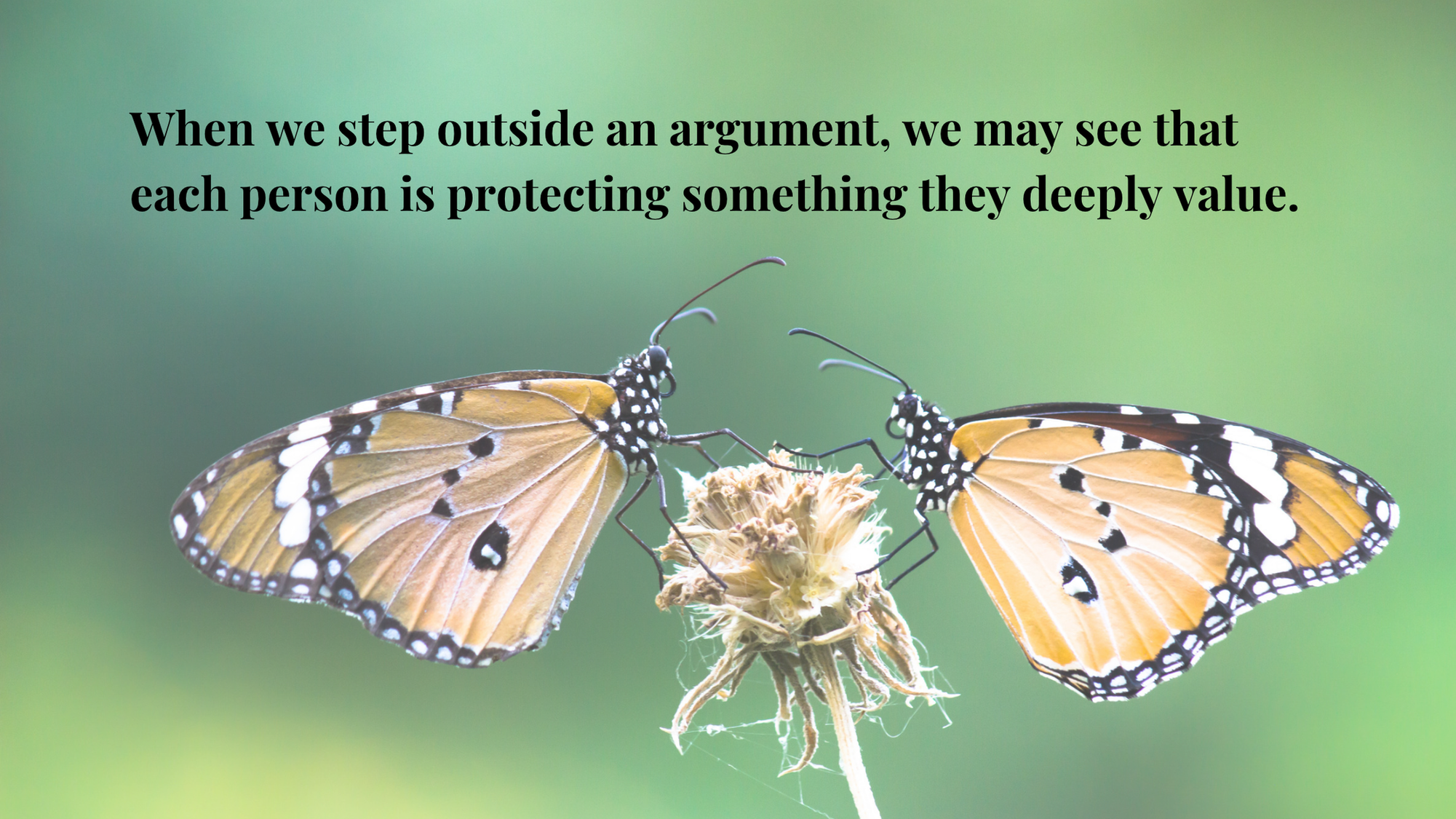
I often think of an eagle flying high above the landscape. Imagine two people on the ground arguing about something they feel strongly about. Each sees the situation through their own experiences, beliefs and emotions. But from higher up, we might begin to see something neither has recognised.
Both people may be trying to protect something they deeply value.
The artist may be protecting their livelihood, the skills they've developed and the meaning their work holds for them. The person using AI may value the freedom to create or opportunities they didn't previously have. We might also notice how the online environment encourages the argument to continue, drawing more people into taking sides.
That doesn't mean every position is equally reasonable or that we should overlook genuine harm. We can still have strong values, disagree and speak up when something matters without becoming emotionally involved in every disagreement.
From a spiritual perspective, I believe we're all learning through our own experiences and arriving at greater awareness in our own time. We can't make those discoveries for somebody else or decide when they should happen.
We can allow people to see things differently without feeling responsible for changing their perspective. We can listen, learn and make our own decisions without needing everyone else to agree with us.
And there's something rather freeing about that.
What does this mean for your own business?
When your business means so much to you, how you share your work matters too. You want it to reach the people who will appreciate or benefit from it, but you also want to feel comfortable with the methods you're using.
And then there's all the advice about AI. Use it for everything, don't use it at all, automate your marketing, protect your creativity, or you'll be left behind. It's enough to make your head spin!
But rather than asking whether AI is good or bad, perhaps there's a more useful question to consider. What are you trying to protect in your own work, and are the choices you're making honouring that?
Perhaps it's the personal relationship you have with your clients, your creativity, your own voice or the time and energy you need to keep your business going. Sometimes these things can pull us in different directions.
You might find AI helpful for organising ideas or taking care of repetitive tasks, while still having concerns about how the technology is developed. You may prefer to write your own content and create your own artwork, or you might decide not to use generative AI at all.
These are choices you can make for yourself, rather than because somebody on social media has told you what you should do. That doesn't mean ignoring the wider consequences, particularly around artists' rights, consent and privacy. It means taking those concerns seriously, considering your own values and making the best decisions you can with what you know.
And if you learn something new that changes how you feel? You can change your mind. We don't have to get everything right the first time.
There's also something else worth protecting: your attention and energy. Because while you're worrying about everybody else's opinions, what happens to the work you wanted to bring into the world in the first place?
So, who gets to decide?
There are important questions about how AI is developed, regulated and used, and they affect all of us, whether we choose to use it or not. These conversations matter, particularly when people's rights, livelihoods and privacy are involved. They deserve more consideration than simply deciding whether AI is good or bad.
But when it comes to our own businesses, we have choices to make too. We can listen to different perspectives, take genuine concerns seriously and still decide what feels right for our work. And as we learn more, we may change our minds. We don't have to have all the answers today or convince everybody else to agree with us.
Perhaps the most important thing is to give ourselves the space to make those decisions thoughtfully, rather than getting caught up in what everyone else thinks we should be doing.
Perhaps the most important thing is to give ourselves the space to make those decisions thoughtfully, rather than getting caught up in what everyone else thinks we should be doing.
We don't have to make our business decisions from inside somebody else's argument.
Feeling overwhelmed by everything happening online?
Sometimes all the opinions, arguments and advice can leave you questioning how you want to show up and share your work.
My free guide, Stay Visible Without Losing Yourself, gives you space to reflect on what's changed, notice what no longer feels right, and find a calmer way forward.